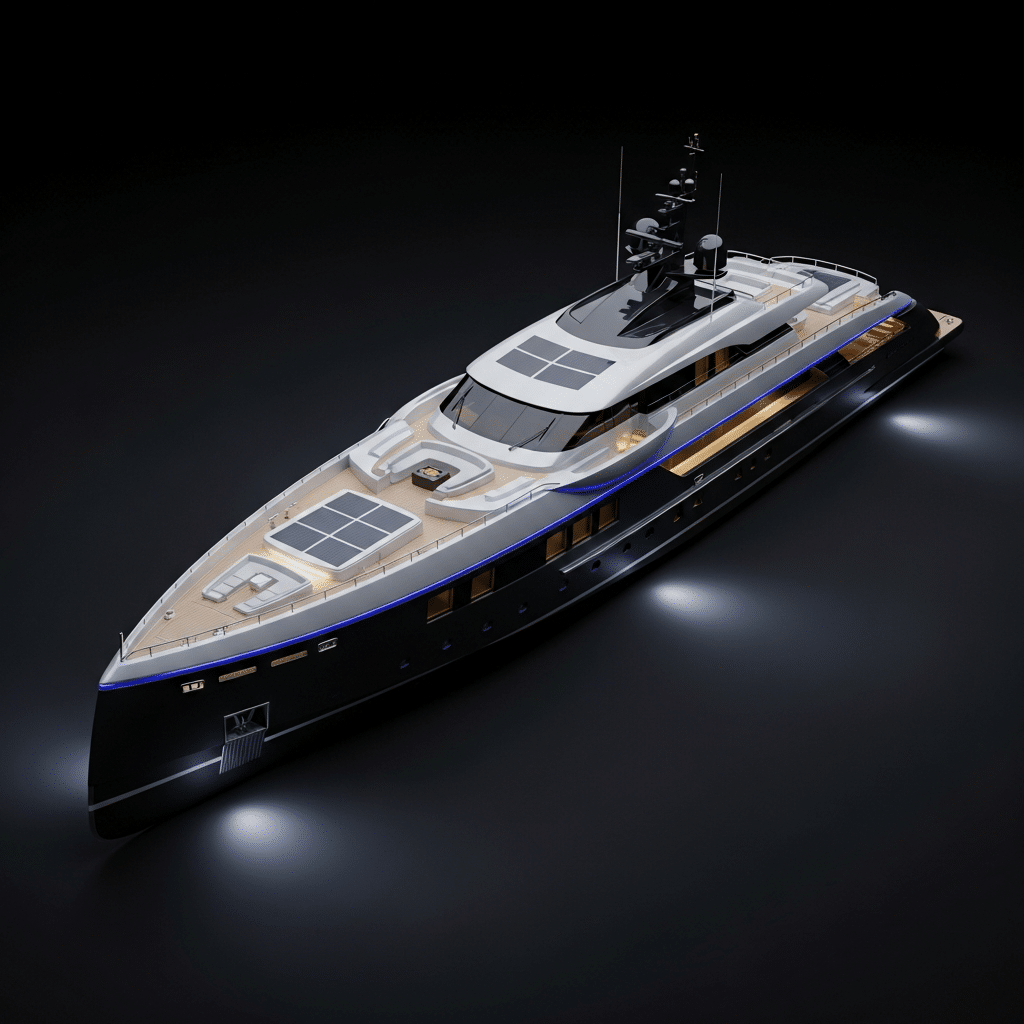
Half hull models display only the port or starboard side of a vessel mounted on a backboard, while full boat models show the complete vessel from all angles on a base or in a case. Half hulls excel for wall display and emphasize elegant hull lines at $800-$3,500, whereas full models provide 360° viewing with complete deck details at $2,500-$8,000+.
The Historical Significance of Half Hull Models
Half hull models originated as practical tools in yacht design and shipbuilding. Before computer-aided design, naval architects and builders created “builder’s half models” to visualize hull shapes, develop construction patterns, and communicate designs to clients. These working models were sliced horizontally into “lifts” allowing loftsmen to transfer dimensions to full-scale templates for frame construction.
The symmetrical nature of vessels made half-hull representation logical—since port mirrors starboard, one side provided all necessary information. Builders could study waterlines, buttocks, and sections directly from the model, making it both an engineering tool and client presentation piece.
Today, half hull models have transitioned from working tools to sophisticated decorative art celebrating maritime heritage and yacht design. They remain the preferred choice for showcasing hull lines and creating elegant wall displays in homes, yacht clubs, and maritime-themed spaces.
Half Hull Models: Advantages and Best Uses
Visual Impact and Display Flexibility
Half hulls create dramatic wall presentations emphasizing the flowing curves and proportions that define a vessel’s character. Mounted on quality backboards in mahogany, oak, walnut, or contemporary white/black finishes, they function as three-dimensional maritime art rather than mere models.
Ideal locations for half hull display:
-
Home offices and libraries with nautical themes
-
Yacht club trophy rooms and member lounges
-
Naval architect and yacht designer offices
-
Maritime museum permanent collections
-
Corporate lobbies for marine industry businesses
The vertical wall mounting saves valuable floor and shelf space while commanding visual attention. Collections of multiple half hulls can chronicle a yachtsman’s vessel history or represent a designer’s portfolio across a feature wall.
Construction Styles and Detail Levels
Half hull models from Abordage are available in three primary configurations:
Flush deck (no details):
-
Smooth deck surface showcasing pure hull form
-
Emphasizes sheer line, beam, and underbody shape
-
Most affordable option: $800-$1,500
-
Perfect for classic designs where lines are the focus
Cabin and cockpit only:
-
Adds dimensional cabin trunk and cockpit areas
-
Shows deck camber and coach roof profile
-
Moderate detail level: $1,200-$2,200
-
Balances aesthetics with budget
Full deck details:
-
Complete deck hardware, rigging, stanchions
-
Miniature cleats, winches, hatches, and fittings
-
Highest detail level: $1,800-$3,500
-
Museum-quality representation
For sailing yachts, consider whether showcasing the rig profile enhances or distracts from hull form. Racing boats with distinctive underbodies (like AC75 foiling monohulls or historic America’s Cup defenders) benefit from flush deck presentation emphasizing hydrodynamic shapes.
Scale Considerations for Half Hulls
Common half hull scales include:
| Scale | Typical LOA | Best For | Example |
|---|---|---|---|
| 1:16 | 24-36 inches | Large yachts, exhibition displays | 40-60′ vessels |
| 1:20 | 18-28 inches | Standard wall displays | 30-45′ boats |
| 1:24 | 15-24 inches | Most popular, balanced size | 25-50′ vessels |
| 1:32 | 12-18 inches | Smaller boats, limited space | 20-40′ craft |
| 1:48 | 8-14 inches | Desk display, multiple models | 15-35′ boats |
The half hull collection at Abordage includes scales from 1:12 to 1:48, accommodating vessels from small daysailers to superyachts.
Scale selection guidelines:
-
Measure wall space allowing 6-8″ clearance around the model
-
Consider viewing distance: closer viewing benefits larger scales
-
Match scale to architectural proportions of the room
-
Budget increases significantly with larger scales
Backboard and Mounting Options
The backboard completes the presentation and should complement both the model and display environment:
Traditional backboards:
-
Solid hardwoods (mahogany, teak, walnut, oak)
-
Raised or beveled edges with routed details
-
Classic brass nameplate engraving
-
Dimensions typically 4-6″ wider/taller than hull
Contemporary backboards:
-
Lacquered white or black finishes
-
Minimalist flat surfaces without borders
-
Modern metallic or acrylic nameplates
-
Flush-mounted presentation
Custom options:
-
Museum white gallery mounting
-
Shadow box frames with depth
-
Illuminated display with integrated LED lighting
-
Protective glass or acrylic covers for high-traffic areas
Backboard selection significantly impacts the overall aesthetic. Traditional wood backboards suit classic yachts and period interiors, while contemporary finishes complement modern yacht designs and minimalist décor.
Full Boat Models: Complete Representation
360-Degree Viewing and Comprehensive Details
Full boat models—also called desk models or cased models—represent the entire vessel viewable from all angles. Mounted on pedestals, bases, or within display cases, they showcase deck layouts, rigging systems, and proportions impossible to convey in half-hull format.
Key advantages of full models:
-
Complete deck layout with helm stations, seating, and equipment
-
Full rigging for sailing vessels including standing and running lines
-
Underbody features like keels, rudders, and propellers visible
-
Port and starboard details including graphics, windows, and ports
-
Bow pulpits, stern platforms, and swim steps fully rendered
Custom desk models excel when deck configuration is a key feature—center console fishing boats, flybridge motoryachts, or performance catamarans benefit from overhead viewing revealing layout logic.
Construction Complexity and Detail
Full models require significantly more craftsmanship than half hulls:
Hull construction:
-
Complete port and starboard sides with matching finishes
-
Underbody details including keels, struts, propellers, and shafts
-
Waterline painting requiring precise masking
-
Through-hull fittings and hardware on both sides
Deck and superstructure:
-
Laser-cut deck patterns in teak or synthetic materials
-
Miniature helm stations with functional-appearing instruments
-
Upholstery in matching fabrics for seating and cushions
-
Canvas work including biminis, dodgers, and covers
-
Tender launches, davits, and deck equipment
Rigging (sailing vessels):
-
Standing rigging: stays, shrouds, and spreaders in stainless wire
-
Running rigging: halyards, sheets, and control lines
-
Sails: dacron or cotton in furled, hoisted, or partially deployed configurations
-
Boom vangs, travelers, and deck hardware functionally positioned
The hundreds of hours required for full model construction explain their higher investment level compared to half hulls.
Scale and Display Considerations
Full boat model scales typically range from 1:20 to 1:50:
Larger scales (1:20-1:30):
-
Allow intricate detail work on small fittings
-
Require substantial display space (36-60″ length for 40-60′ vessels)
-
Command attention as focal pieces
-
Investment: $5,000-$15,000+
Medium scales (1:35-1:40):
-
Balance detail visibility with manageable size
-
Fit standard desk or credenza tops
-
Most popular for office displays
-
Investment: $2,500-$6,000
Smaller scales (1:45-1:50):
-
Suitable for limited spaces or multiple-model displays
-
Good proportions but limited fine detail
-
Budget-friendly full model option
-
Investment: $1,800-$3,500
The large scale custom models category includes exhibition pieces for yacht clubs, builder showrooms, and museum installations requiring dramatic presence.
Display Case Options
Protecting your investment with quality display cases is essential:
Standard cases:
-
Acrylic or glass with wood bases
-
Dust protection and UV filtering
-
Removable tops for access
-
Investment: $300-$800
Museum-quality cases:
-
Climate-controlled with humidity management
-
LED lighting systems with adjustable color temperature
-
Locking mechanisms for security
-
Mirror or fabric-lined bases
-
Investment: $1,200-$3,000+
Browse display case options designed specifically for boat models ensuring proper fit, protection, and presentation.
Making Your Decision: Half Hull or Full Model?
Choose Half Hull Models When:
Space is limited: Wall mounting preserves valuable floor and surface areas in smaller offices, homes, or yacht cabins.
Hull form is paramount: Racing sailboats, classic designs, or vessels with distinctive underbodies showcase best in half-hull format emphasizing hydrodynamic qualities.
Budget is moderate: Half hulls cost 40-60% less than comparable full models while delivering impressive visual impact.
Creating a collection: Multiple half hulls documenting yacht ownership history or designer portfolio work well in grouped wall displays.
Traditional aesthetic preferred: Half hulls convey classic maritime character suited to traditional interiors, yacht clubs, and heritage presentations.
Specific applications:
-
Commemorating a beloved cruising sailboat emphasizing graceful lines
-
Yacht designer’s office displaying hull form studies
-
Yacht club trophy room honoring classic fleet one-design
-
Historic vessel preservation focusing on hull architecture
-
Gift for yachtsman with limited display space
Choose Full Boat Models When:
Comprehensive representation needed: Yacht owners wanting complete documentation of their vessel including deck layout, equipment, and configuration.
Deck details are significant: Center console fishing boats, expedition trawlers, or luxury flybridge yachts where deck arrangement tells the story.
360° viewing desired: Office desks, rotating displays, or locations where viewers circulate around the model.
Marketing and sales tools: Yacht builders, designers, or brokers using models for client presentations requiring complete visualization.
Budget allows premium investment: Full models with complete details represent substantial craftsmanship investment but deliver unmatched representation.
Museum or exhibition display: Institutions requiring educational pieces where viewers study all aspects of vessel design and construction.
Specific applications:
-
Yacht builder showroom displaying flagship model’s innovative deck layout
-
Owner’s yacht documenting custom interior and exterior configuration
-
Maritime museum educational exhibit showing complete vessel systems
-
Corporate gift commemorating significant maritime project
-
Designer portfolio piece showcasing comprehensive design work
Hybrid Options and Special Considerations
Some clients commission unique variations combining half hull and full model characteristics:
Half models with deck details: The hull is shown in profile, but the deck is fully detailed and visible from above, creating dimensional interest while maintaining wall-mount format.
Cased half hulls: Traditional half hulls mounted in shadow-box frames with glass protection, suitable for high-traffic areas or valuable historic replicas.
Sectional models: Full hulls cut longitudinally showing interior layouts, structural systems, or engineering details—popular for technical presentations and museum exhibits.
Dioramas: Full models in scenic settings with water effects, dock structures, or maritime context creating narrative presentations.
Commissioning Your Model with Abordage
Whether selecting a half hull model or full custom boat model, Abordage’s master craftsmen deliver museum-quality work documented through 30+ years of maritime modeling excellence.
The process begins with consultation assessing your vessel, display environment, budget, and preferences. Providing comprehensive photographs and documentation ensures accuracy regardless of format selected.
Visit the custom model request page to begin your project, or explore the complete model collection for inspiration from historic ships to contemporary superyachts.
Frequently Asked Questions
Can I commission both a half hull and full model of the same boat?
Absolutely. Many yacht owners commission a detailed full model for primary display and smaller-scale half hulls as gifts for crew, family, or to mark significant voyages.
Which format better shows racing yacht designs?
Half hulls typically showcase racing yacht hull forms, underbodies, and hydrodynamic features more effectively, though full models better represent deck layouts and rigging systems.
How do half hulls and full models compare in shipping fragility?
Half hulls are more robust for shipping due to backboard protection and single-side exposure. Full models require more careful packaging, especially those with rigging or delicate deck fittings.
Can existing half hulls be converted to full models?
Not practically. The construction methods differ significantly. However, Abordage can create a matching full model using the same documentation as the original half hull.